

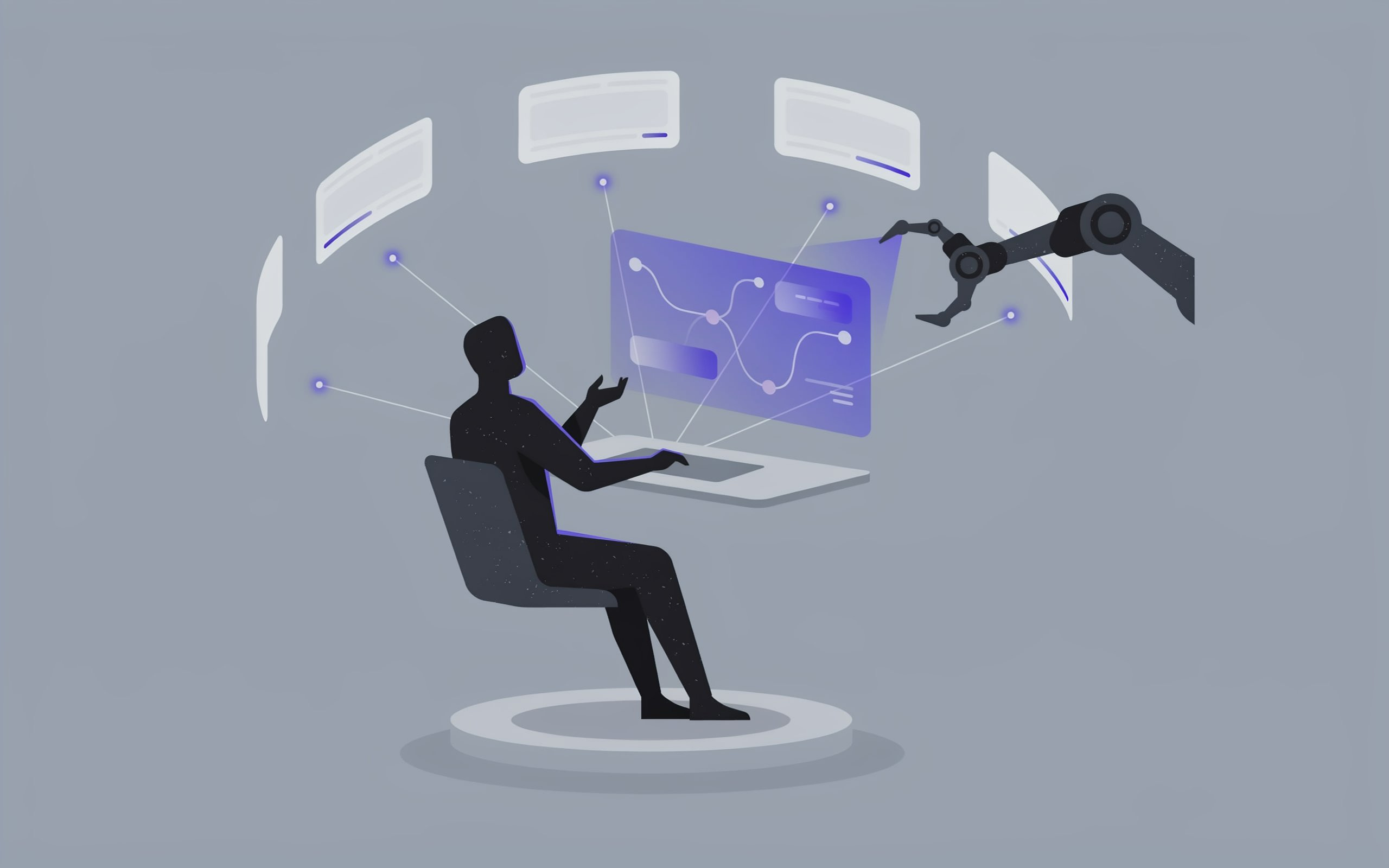
Somewhere in the last eighteen months, a small cohort of engineers started working in a new way. To see what’s new about it, you have to see what they left behind.
For as long as anyone reading this has been writing software, the pattern has held. You hold an intent in your head about what the system should do, then type it into the machine line by line until intent and code agree. The engineer is the author. The IDE is the workbench. The pull request is the proof of work. The pattern is old enough to be invisible. It’s how the discipline defines itself.
Call the ones who broke from it the “agentic engineers.” Three to five percent of working developers. Small enough that most engineering orgs have one or two and don’t know it. Large enough that any infrastructure company ignoring them is already losing a market.
Their authorship has flipped. They direct agents that write code. They review more than they type. They run multi-hour autonomous sessions and come back to a diff larger than anything they could have produced themselves in the same window. They hold a working understanding of ten times more code than they could ever write by hand. They talk about “the agent” the way they used to talk about a junior teammate — sometimes proud, sometimes irritated, occasionally a little spooked.
You can spot one by a single tell. When something breaks in production, they don’t reach for their own commit history first. They reach for the agent’s.
What everyone gets wrong about them
The usual takes on AI-assisted engineering get the agentic engineer wrong in the same way. The optimist take is that AI is making engineers more productive: same job, more output. The pessimist take is that AI is deskilling engineers, replacing them, eroding the craft. Both are looking at the wrong group. The first describes the ninety-five percent who autocomplete with an AI sitting in their IDE. The second describes a future that may or may not arrive. Neither describes the engineer who has already flipped.
The flip is not “I type faster now.” The flip is “my job is no longer typing.” The bottleneck moved. When you were the author, the constraint was how fast you could translate intent into code. Now you’re the reviewer, and the constraint is how fast you can trust what the agent ships.
That’s the inversion. The pain of the agentic engineer isn’t velocity. It’s verification.
The trust gap
Talk to one for ten minutes and the same phrase keeps surfacing: I don’t trust this. Not in the philosophical sense. They trust the agent enough to deploy code they didn’t write, which is itself a startling level of trust. They mean it in the operational sense. They ship the agent’s code and live with what it breaks. They wear the pager. They take the call at 2 a.m. when a duplicate write blows up an invoice. They write the postmortem when a retry storm takes down a checkout flow.
The trust gap is the load-bearing felt problem. Everything else is mechanism.
The mechanism is a small set of bug classes that show up over and over, regardless of which model wrote the code. Duplicate writes when a retry fires on a call that already succeeded. Broken retries that lose work on transient failures. Races that pass tests because tests don’t load the system the way production does. In-flight workflow breakage when a deploy lands while a long-running process is mid-step. None of these are exotic. Senior engineers have been writing carefully around them for decades. That’s most of what “carefully” means at scale. But an agent doesn’t have a scar on its forearm from the last race condition that ruined its quarter. It writes confident-looking code that does what the prompt said and quietly drops the cases the prompt didn’t anticipate.
So the engineer reviews. And reviews. And reviews. They read more code in a day than they used to write in a week. They build out testing harnesses they never needed when they were the author. They hold long conversations with the agent that read like an oral exam for a junior who keeps almost passing. They are tired in a way that “I wrote less code today” was supposed to fix.
This is the pain. Not “the agent is bad.” Not “I can’t get the agent to do the thing.” The agent does the thing. The pain is: I cannot tell, without doing the review myself, whether the thing it did is the thing that will actually hold up in production. Review is the new bottleneck. And review doesn’t scale the way the agent does.
Why review doesn’t close the gap
There’s a tempting fix here, and it’s the one most tools are reaching for: better review. Smarter diffs. Auto-generated tests. Static analyzers that catch the obvious failures. AI-assisted code review on the agent’s output. A second agent that critiques the first agent.
It won’t be enough. The trust gap is not a comprehension problem. It’s a guarantee problem. The agentic engineer doesn’t need a tool that helps them notice the duplicate-write bug faster. They need a system in which the duplicate-write bug cannot be written in the first place.
Karpathy’s self-improving agent script worked because the world the agent lived in was constrained well enough: one repo, one metric, one number. Carducci built the whole argument for agentic infrastructure on that buried line: you can’t make the agent trustworthy by improving the agent if the world the agent acts in doesn’t describe itself. The same logic runs one layer up. You can’t make the agent’s code trustworthy by improving the review if the runtime the code lands in doesn’t refuse the bug classes the agent reliably produces.
That’s the move worth making. Trust by construction, not trust by review. A runtime that knows about retries and idempotency at the protocol level, so duplicate writes can’t happen even if the agent writes naive code. Workflows whose state survives a deploy, so in-flight breakage isn’t a class of bug. It’s a setting. Tests that load the system the way the system gets loaded, so races surface before the pager does. Not magic. Engineering. The same engineering senior developers used to keep in their heads, lifted out and made structural.
When that runtime exists, the agentic engineer’s pain doesn’t disappear. It changes shape. They go back to doing the work they actually want to do: directing intent, choosing architecture, deciding what gets built. They stop spending six hours a day acting as a backstop for code they didn’t write. The agent ships code they can trust because the runtime refused the code they shouldn’t.
Why this cohort decides the market
The agentic engineer is not just an early adopter. They are a referenceable early adopter, which is rarer and more valuable. They adopt unprompted, with no procurement cycle because the pain is acute enough to overrule organizational friction. They have budget authority or sit one desk from someone who does. Every team they touch becomes a reference customer once the tooling proves out because their teammates can see what changed. The diffs land faster, the postmortems get shorter, and the deploys stop hurting. And they are the fastest-growing developer cohort in the market, not because everyone wants to flip, but because the engineers who do flip are visibly outperforming the ones who don’t.
Build for them, and you don’t market your way to the rest. They do.
The question worth holding isn’t whether the rest of engineering goes agentic. They will. The question is who owns the runtime when they get there. That layer turns the agent’s code from “correct in theory” into trustworthy in production. The engineer doing the review tonight is asking that question on every pull request, even if they haven’t said it out loud. The answer is structural, not stylistic.